Old Cartridges, New Dreams: The Indie Devs Shipping Games for Hardware Your Parents Owned
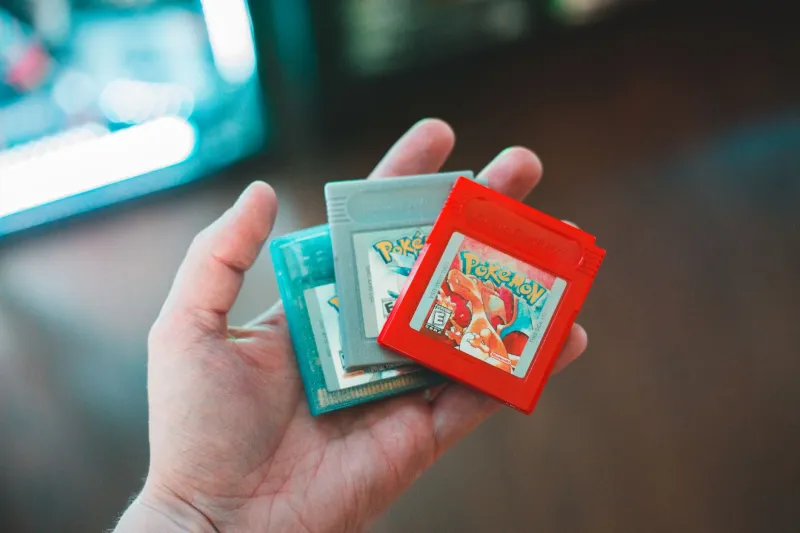
There's a cartridge sitting on Marcus Webb's desk that took him two and a half years to finish. It's got a custom label, a translucent shell, and a game on it that runs — natively, without emulation — on a Game Boy Color. Webb is 29 years old. He wasn't even walking when Nintendo launched that hardware.
"People keep asking me why," he says, laughing. "And honestly, the simplest answer is that the limitations forced me to become a better designer. You can't hide bad game design behind a particle effect when you've got four shades of color to work with."
Webb isn't alone. Across the indie development scene, a quietly passionate movement has taken root: creators choosing to build entirely new games for hardware that the industry declared obsolete decades ago. We're talking Game Boy Advance homebrew with original soundtrack chips, Sega Genesis titles shipping on reproduction cartridges, and PlayStation 1 games being burned onto discs and sold at indie expos. It's weird, it's niche, and it's absolutely catching fire.
Why Constraint Is the New Creative Superpower
Modern game development tools are staggering in their capability. Unreal Engine can render photorealistic environments. Unity lets a solo developer spin up a 3D project in an afternoon. The ceiling has essentially disappeared — which, paradoxically, is part of the problem.
"When you can do anything, it's genuinely hard to decide what to do," says Priya Nair, a Chicago-based developer who recently shipped a role-playing game for the original Game Boy — monochrome display, four-button input, the works. "Working on old hardware is like writing a sonnet. The form is the challenge, and when you nail it inside those boundaries, the result feels earned in a way that open-ended projects sometimes don't."
The technical constraints are real and unforgiving. Original Game Boy hardware tops out at a 2.6 MHz processor and 8KB of working RAM. The Sega Genesis, while beefier, demands that developers write in 68000 assembly or tightly optimized C to get anything resembling smooth performance. These aren't limitations you can patch around. They demand ingenuity.
That ingenuity is showing up in the games themselves. Developers working in these spaces are rediscovering tricks that original-era programmers used — sprite multiplexing, palette swapping, clever audio compression — and then combining them with design sensibilities that simply didn't exist in 1992. The result is something genuinely new wearing familiar clothes.
The Audience Nobody Expected
Here's where the story gets interesting. The assumption would be that retro homebrew is a niche-within-a-niche hobby, bought exclusively by collectors with display cases full of original hardware. And yes, that audience is absolutely there and enthusiastic. But it's not the whole picture.
At indie gaming expos across the US, vendors selling retro homebrew cartridges are consistently reporting two distinct buyer profiles. The first is exactly who you'd expect: adults in their 30s and 40s, nostalgic for the hardware they grew up with, excited to see it still producing new experiences. The second group is younger — sometimes much younger — players who've discovered these old systems through YouTube retrospectives, speedrunning communities, or parents' attic finds.
"I sold a copy of my Genesis game to a 17-year-old at a show in Austin last spring," says developer Terrell Okafor, whose action-platformer Iron Delta shipped on cartridge in 2023. "He had a Genesis his dad gave him. He'd never owned one before. He came back the next day and told me it was the best game he'd played all year. That hit different."
This cross-generational appeal is part of what makes the retro homebrew scene so compelling from a platform perspective. GameStarter has seen increasing interest from developers in this space looking to connect with exactly these kinds of audiences — players who want something tactile, something with stakes, something that doesn't disappear when a subscription lapses.
The Business of Building for Dead Platforms
Let's be honest: nobody is getting rich off Game Boy cartridges. Manufacturing reproduction carts costs money, and the addressable market is finite. Most developers in this space treat it as a passion project running alongside other work, or they fund production through small-batch pre-orders and crowdfunding campaigns.
But "not rich" doesn't mean "not viable." Several retro homebrew titles have cleared five-figure revenue on limited runs, and the collector premium on physical retro media means developers can charge prices that would seem steep for a digital indie release. A well-produced Game Boy Color cart with a printed manual and custom box can move for $45 to $60, and fans pay it willingly.
There's also a growing digital side to this scene. ROM files for homebrew games — playable on emulators and flash carts — are often sold or offered as pay-what-you-want downloads, dramatically expanding the potential audience beyond physical hardware owners. Some developers report that digital sales outpace physical ones by a wide margin, even when the physical edition is what gets all the attention.
Starting Your Retro Dev Journey
If this has you curious about trying it yourself, the barrier to entry is lower than you'd think. Tools like GB Studio have made Game Boy development accessible to developers without deep technical backgrounds, offering a visual interface that handles much of the low-level complexity. For the Genesis, the SGDK (Sega Genesis Development Kit) provides a modern C-based framework with extensive documentation.
Communities like the GBDev forums and the Sega-16 development boards are active, welcoming, and genuinely helpful to newcomers. And platforms like GameStarter are increasingly home to developers showcasing retro homebrew projects alongside their more conventional releases — because the players who care about this stuff are here, and they're looking.
Marcus Webb is already three months into his next project. This time, he's targeting the Game Boy Advance — a luxury upgrade, he jokes. "Four times the colors. I don't know what I'm going to do with myself."
Somehow, we suspect he'll figure it out.